Software Engineering & AI
We are living through a time of dramatic technological upheaval. AI is ushering in a new technical-industrial era. I see this as a challenge to forge new paths. As implementation details are increasingly handed over to AI agents, structural and conceptual thinking becomes ever more important. With my many years of experience in the automotive industry and a broad educational background — a degree in Physics, a doctorate in Mathematics and a second doctorate in Philosophy — I possess a breadth and depth of expertise that is rare today. Throughout this, I develop robust, transparent and high-performance software solutions at the intersection of engineering, mathematics and artificial intelligence.
Python-based Systems Development
Data Science & Machine Learning
Modelling and Code Generation
Function Development
Profile & Positioning
I have been working in automotive engineering for over 15 years. Two areas have emerged as my main pillars. On the one hand, I have found solutions in various software development projects at the intersection of specific, complex domain knowledge and tool-supported generalisation, shaping them to be user-friendly. On the other hand, in collaboration with academic partners, I have developed and implemented AI models using data-driven methods.
In doing so, the following values have emerged as central for me:
Curiosity
All great things begin with the enthusiasm to try something out, to gain new experiences, to keep an open mind and to be able to surrender to the flow of inspiration.
AI Competence
We are currently experiencing the greatest revolution in intellectual work since the invention of the printing press. The industrialisation of creative processes poses enormous challenges for humanity that need to be addressed. Work culture is beginning to change fundamentally. Not losing touch and remaining open to the new remains a great challenge for everyone.
Systems Thinking
When AI agents write hundreds of lines of code in minutes, maintaining an overview becomes essential. Anyone who wants to be more than just a prompt-relay as a modern software developer faces a new, high-intensity way of working that demands a radical realignment.
Judgement
With knowledge now so abundantly available, keeping the reins firmly in hand is more important than ever. Where must one look more closely? Which quality metrics need to be monitored? What are the right questions for further development?
Interdisciplinary Communication
The acceleration of development work means that individuals take on ever greater responsibility. Coordination becomes more important than ever. Precisely when technical details are increasingly understood by algorithms, it remains up to humans to trace solutions back to people.
Implementation Drive
Am Ende zählen Ergebnisse. Die letzten 20 % eines Projektes sind oft die schwierigsten, da aufgeschobene Entscheidungen und technische Schulden hier ihren Tribut fordern. Von Anfang an die strategischen Ziele im Fokus zu behalten, architektonisch zu denken und auch dem bloßen Druck nach dem nächsten Feature zu widerstehen, sichert langfristige Wartbarkeit.
Responsibility
At the end of the day, we are all human. As such, we bear responsibility for one another. When good work is combined with humour and humanity, it becomes more than just a job.
Services
My range of services covers consultancy in the preliminary stages, concept development, implementation, testing, technical coordination and lifecycle management.
Python-based Software Solutions
Front-end and back-end development – cleanly structured and maintainable.
Data Science & Machine Learning
Modelling of technical systems, anomaly detection, forecasting models.
Architecture & System Design
Structuring complex software projects, building maintainable and extensible systems.
CI/CD and Development Processes
Automation, testing, deployment – professional development infrastructure.
Technical Coordination
Management of development teams, supervision of students and projects.
Mathematical Modelling
Formal modelling of technical systems, numerical methods, simulation.
My work is characterised by a systematic approach: models are not merely implemented, but structurally understood, abstracted and transferred into reproducible software architectures.
Clear Separation of Layers
Model, data and execution are consistently separated from one another.
Reproducible Pipelines
Stable software architectures instead of ad-hoc scripts and notebook chaos.
Maintainability & Extensibility
Solutions that not only work today but remain viable in the long term.
Conceptual Depth
Problems are analysed structurally, not merely solved pragmatically.
Projects
A selection of projects I have initiated or supported:
Synarius
Synarius ist ein von mir initiiertes OSS-Projekt für ein Framework zur Systemmodellierung. Kernidee ist es, das Problem „Systemmodellierung" offen und modular zu denken. So wie Python sich als lingua franca für KI und viele Engineering-Aufgaben herausgestellt hat, wäre etwas Ähnliches im Felde der graphischen Systemmodellierung wünschenswert. Doch bei derartigen „Low-Code"-Ansätzen herrschen nach wie vor spezifische Lösungen für das „Silo" vor, oder dominiert der proprietäre Generalist Simulink weite Bereiche des Engineerings.
The typical workflow:
Model → Intermediate Representation → Code Generation → Execution
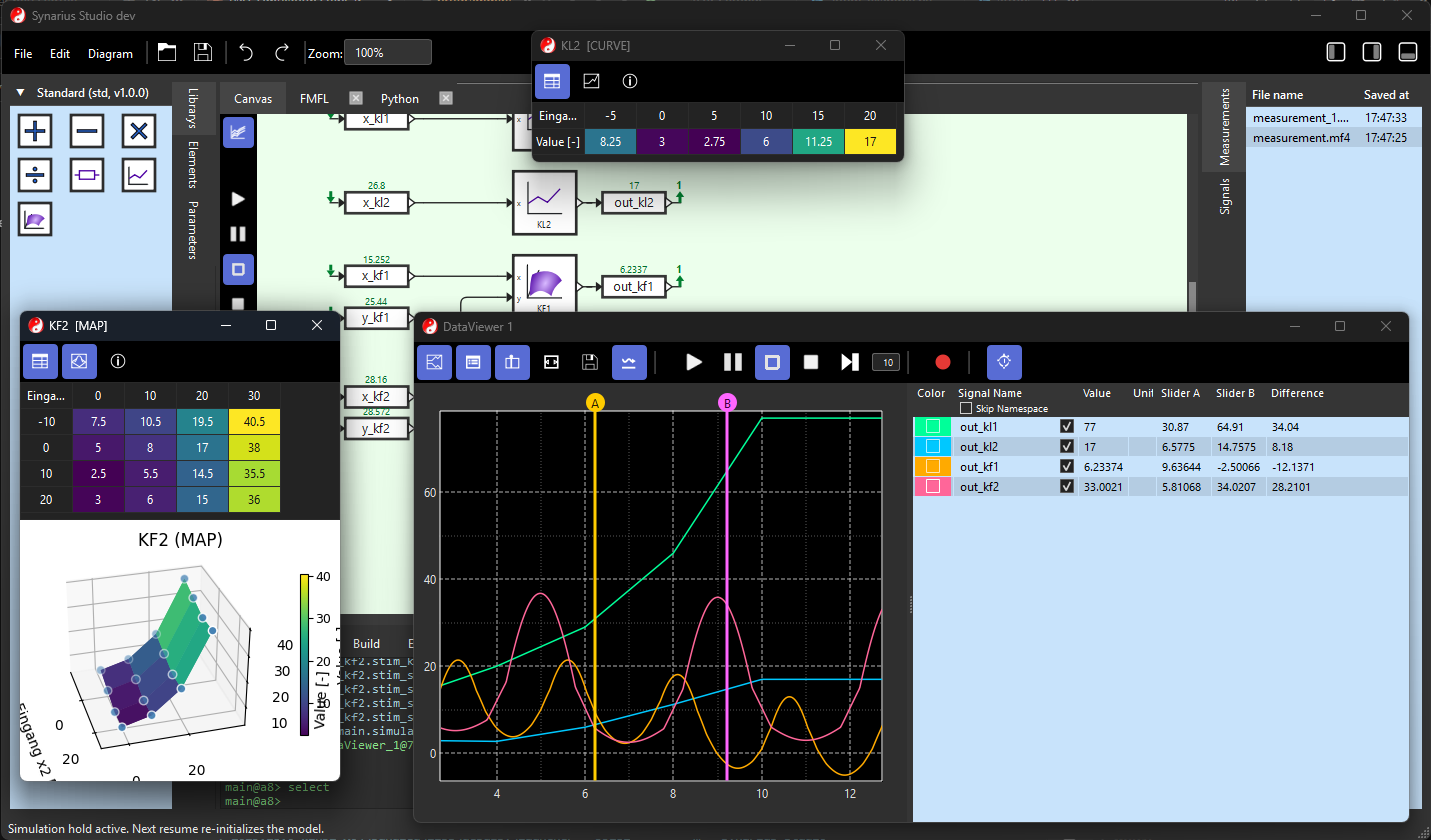
Deterministic Dataflow Modelling
Clear, reproducible modelling of technical systems.
Strict Separation of Layers
Model, execution and data storage are cleanly separated.
Code Generation
Automatic generation of Python code and integration of FMUs.
FMF and FMFL as Standards
Die Standards „Functional Model Format" und „Functional Model Format Language" formalisieren Funktionen sprachunabhängig.
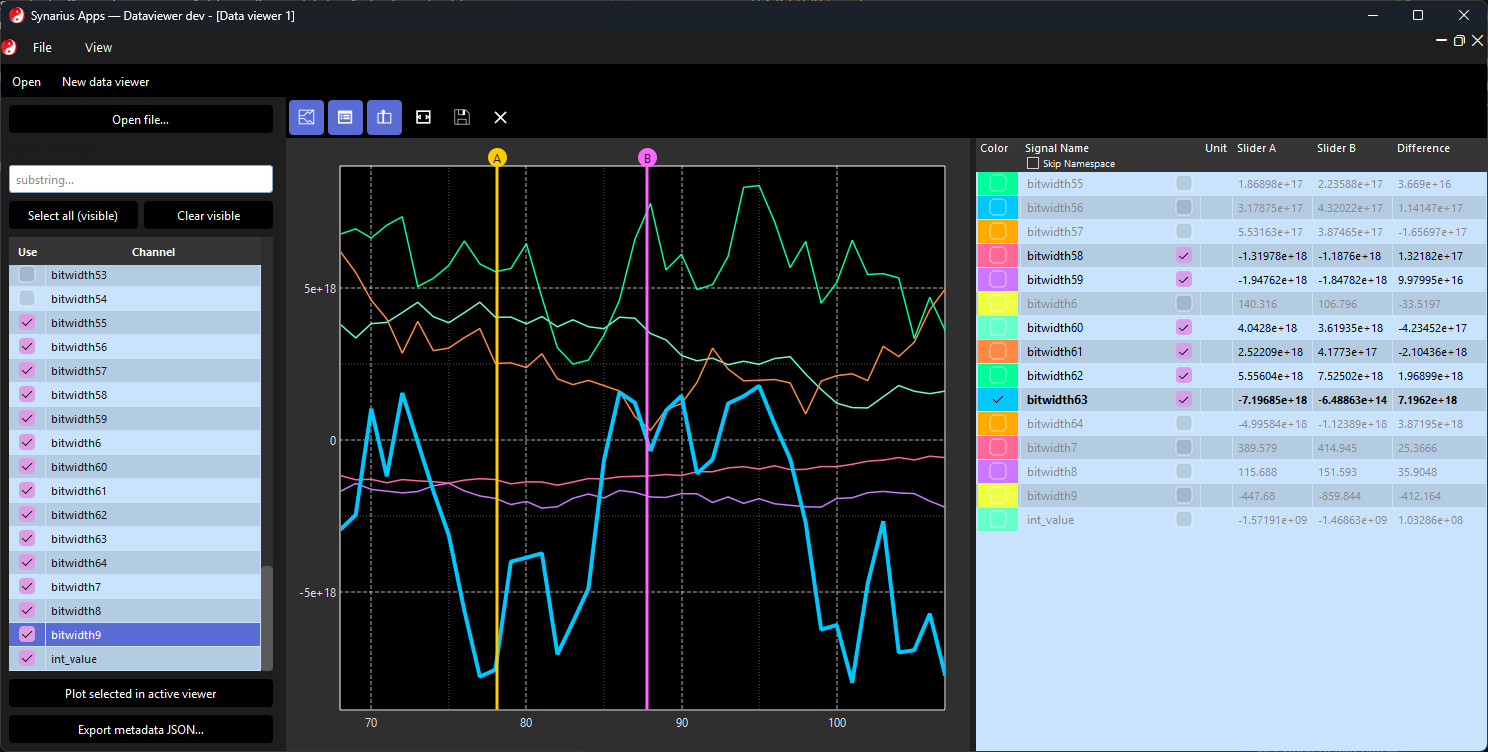
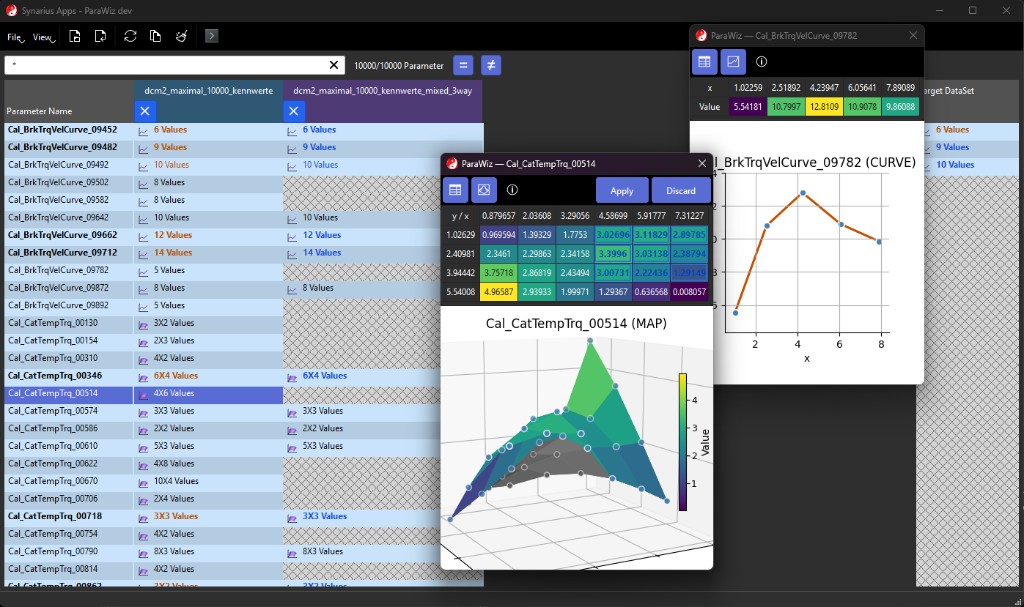
Inhouse
- Ein Tool zur Konfigurierung, Visualisierung, Validierung und Dokumentation von hoch modularen Software-Komponenten eines Teilgewerkes im Kontext der Motorsteuerung (Python, LOC > 20.000).
- Ein Tool zur Parameteridentifikation und Kosimulation basierend auf binären Artefakten (C++, LOC > 50.000).
Technologies
The technology stack is designed for robustness, reproducibility and long-term maintainability.
Languages
Python · C++ · Java · C# · Matlab
Frameworks & Libraries
TensorFlow · NumPy · Pandas · Django · PySide · Qt · Boost
Tools
GitLab · GitHub · Jira · Confluence · Cameo Systems · Mendix Studio · ETAS Ascet · ETAS Inca · Matlab Modeller · CI/CD · Linux
Focus Areas
Anforderungsmanagement · SW-Architektur · Implementierung · Data Pipelines · Simulation · Modellierung · Codegenerierung
Infrastructure
Linux · Windows · Administration von VMs
Dr. Dr. Wätzold Plaum
Principal Engineer · AI & Modeling · Software Architect
“I develop model-based and AI-supported solutions for complex technical systems – from the mathematical foundation to production-ready software.”
Professional Experience
Principal Engineer
IAV GmbH · 2019–2026- Development of neural component models
- Leadership of tool and architecture projects
- Coordination of complex software projects
Development Engineer – Mechatronics & System Modelling
IAV GmbH · 2010–2019- Development of extensive Python tools (>25k LOC)
- Modelling of diesel and gas systems
- AI-based parameterisation of physical models
- Leadership of software and optimisation projects
Research Associate (Mathematics)
University of Regensburg · 2004–2009- Numerical Optimisation (Mixed-Integer)
- Teaching and Supervision
Education
- Dr. rer. nat. (Mathematics) — University of Regensburg, 2009
- Dr. phil. (Philosophy) — University of Regensburg, 2019
- Diploma in Physics — University of Regensburg
Contact
I am available for projects in the areas of software development, data science and technical modelling. If you are interested or have any questions, please feel free to get in touch.
-
Email
waetzold.plaum@googlemail.com -
GitHub
github.com/synarius-project